
IBS (Irritable Bowel Syndrome) Homeopathy Treatment in Calicut, Kozhikode
Personalised homeopathic care for IBS — bloating, cramps, loose stools or constipation — with Dr. Thahseen Siraj at our Calicut clinic.
What Is Irritable Bowel Syndrome?
IBS is a common, long-term problem of how the gut works. The bowel is not damaged, but it becomes sensitive and its movements irregular. Symptoms often come and go, and are frequently worse with stress, irregular meals or certain foods.
There are three common patterns: IBS with diarrhoea (IBS-D), IBS with constipation (IBS-C), and a mixed type that alternates between the two.
- Abdominal pain or cramps that ease after passing stools
- Bloating, gas and a feeling of fullness
- Urgency to pass stools, often in the morning or after food
- Constipation, or alternating loose and hard stools
- Mucus in the stool and a feeling of incomplete emptying
Treating IBS as a Whole-Person Problem
Because IBS is closely linked with stress, sleep and eating habits, Dr. Thahseen Siraj takes a detailed history of your bowel pattern, food triggers, anxiety, sleep and routine before choosing individual homeopathic treatment. It is combined with practical advice on regular meals, fibre, water and stress management.
Many people with IBS see gradual improvement over a few months of consistent treatment, but results vary. Please continue any medicine prescribed by another doctor.
Self-CareSimple Habits That Help IBS
Eat at regular times, avoid very large or late meals, notice your own trigger foods (spicy, oily, milk products or gas-forming foods for some people), and stay active. Good sleep and stress control matter as much as diet — see also our page on stress and anxiety.
TypesTypes of IBS
Knowing your type helps plan diet and treatment:
- IBS-C: mainly constipation, with hard or lumpy stools
- IBS-D: mainly loose stools and urgency, often in the morning or after meals
- IBS-M: a mix, swinging between constipation and loose stools
IBS or Something More Serious? Tests That May Be Advised
IBS is diagnosed from your symptoms once other problems have been ruled out. Depending on your age and symptoms, your doctor may suggest:
- Blood count, thyroid test and a test for coeliac disease
- Stool tests for infection or inflammation
- A colonoscopy if you have warning signs: bleeding, weight loss, symptoms starting after 45–50, waking at night with diarrhoea, or a family history of bowel cancer or IBD
A Practical Diet Plan for IBS
There is no single IBS diet; what matters is finding your own triggers. Keep a food and symptom diary for two weeks, eat at regular times, and add fibre slowly (oats and other soluble fibre are usually better tolerated than bran). Some people improve on a short, supervised low-FODMAP diet, which limits certain gas-forming foods for a few weeks and then reintroduces them one by one. See also constipation and gastritis and acidity.
When to seek urgent care: See a doctor promptly — these are not typical of IBS — if you have blood in the stool, unexplained weight loss, symptoms that wake you at night, fever, anaemia, symptoms that start after age 50, or a family history of bowel cancer or IBD.
Who Will See You
Dr. Thahseen Siraj, BHMS (Reg. No. TCMC 12950), a homeopathic physician with 10 years of experience whose main focus is piles, fissure, fistula and digestive problems, consults at our Calicut clinic every Tuesday, 3:00–6:30 PM. Consultation fee: ₹500. Call 9400 920060 to book. About Dr. Thahseen Siraj
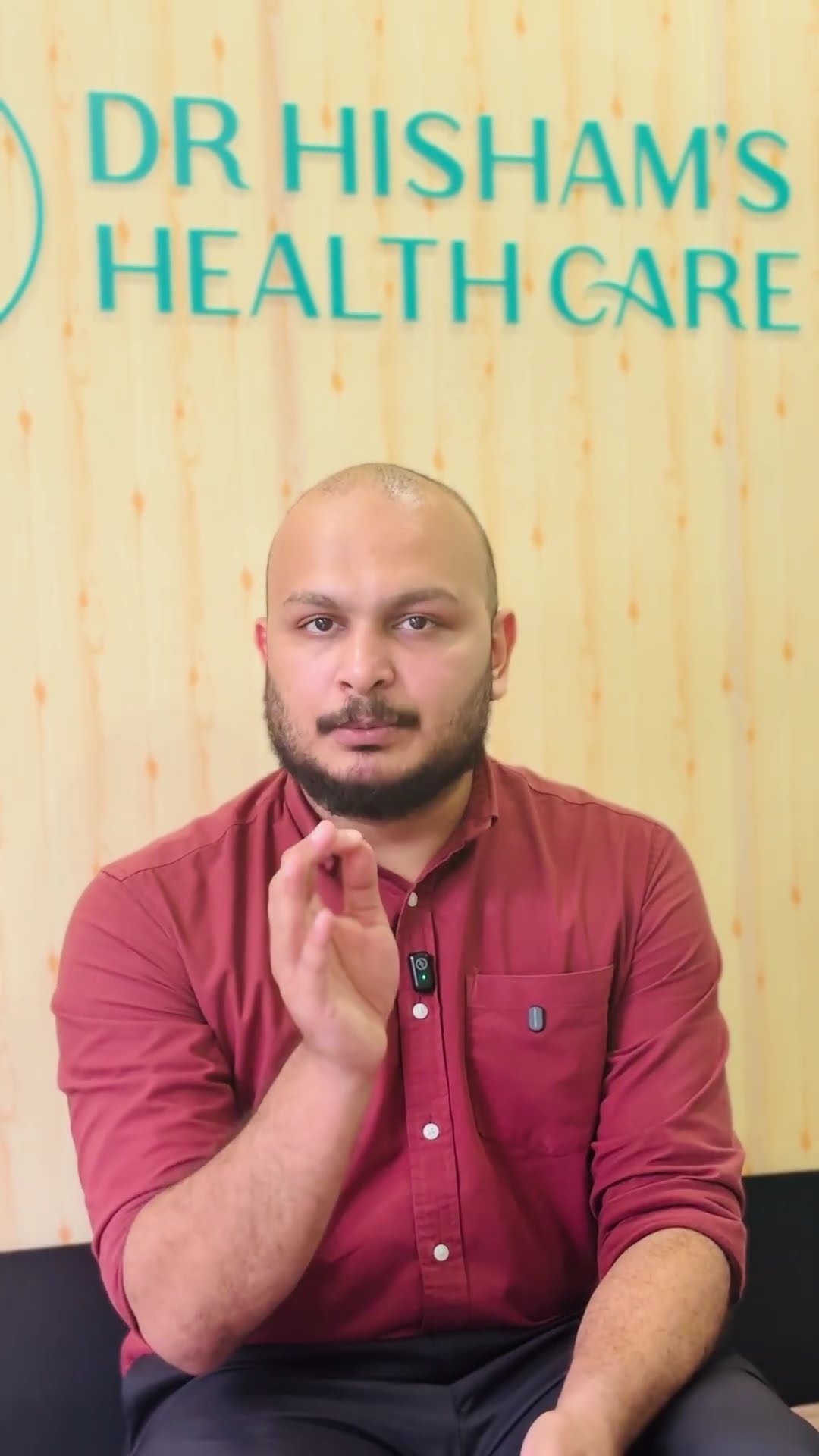
▶️ Watch: Dr. Thahseen on IBS
A 42-second explainer in Malayalam: urgency after meals, stomach pain, bloating, gas, and loose stools alternating with constipation.
📞 Book a Consultation
Calicut: 9400920060
Wandoor: 7306816060
IBS — FAQs
Homeopathic treatment is used for IBS as part of an individual plan that also covers diet, routine and stress. Many patients find their symptoms ease gradually; results vary and no cure is promised.
IBS does not damage the bowel, but it can affect daily life. Warning signs such as bleeding or weight loss need tests to rule out other conditions.
Triggers vary. Common ones are very spicy or oily food, large meals, and for some people milk products or gas-forming foods. A food-and-symptom diary helps find yours.
Yes, stress and anxiety often make IBS worse. Treatment looks at sleep and stress as well as digestion. Read about how IBD differs from IBS.
Dr. Thahseen Siraj, BHMS (Reg. No. TCMC 12950), a homeopathic physician with 10 years of experience who focuses on digestive and anorectal problems. He consults at our Calicut clinic every Tuesday, 3:00 PM to 6:30 PM; the consultation fee is ₹500. See his profile.
No. IBS does not damage the bowel and does not turn into cancer. However, warning signs such as bleeding, weight loss or new symptoms after middle age must always be checked, because they are not typical of IBS.
IBS is a long-term condition that tends to come and go. Improvement is usually gradual over weeks to months, with regular follow-ups to adjust treatment, diet and stress management.
Ready to talk to a doctor?
In person at Calicut or Wandoor, or online from anywhere — medicines couriered to your door.